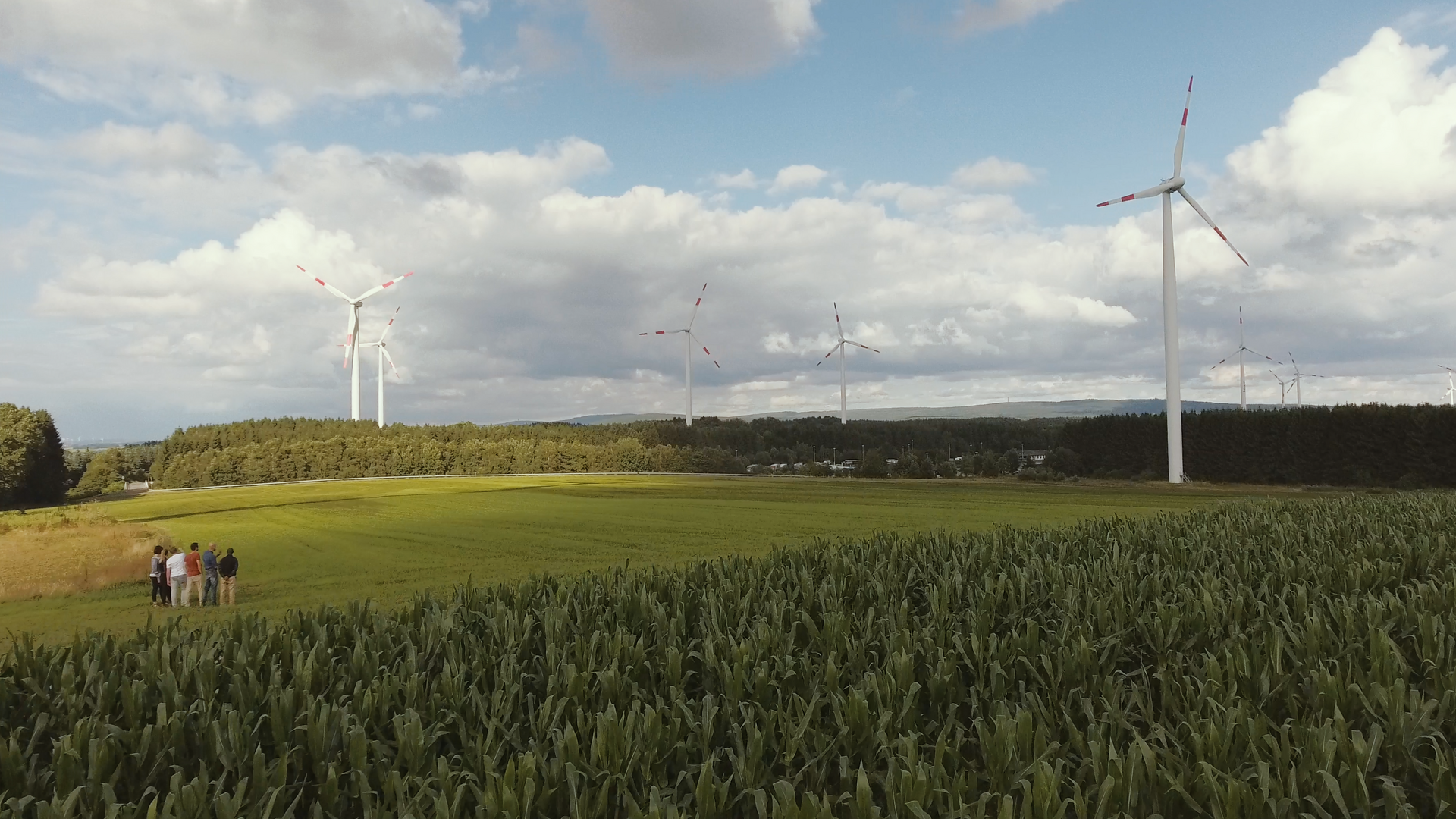
When it comes to climate protection, the government is focusing primarily on renewable energies and efficient energy systems. The energy transition presents us with the challenge of making the provision of electricity, heat, and energy smart and sustainable. How can we provide energy in a CO2-neutral way? Which processes and procedures in industry do we need to optimize? How can renewable energy be generated intelligently and sustainably?
The intelligent generation, storage, and distribution of energy is currently determining the future of an entire industry. Students of the “Energy Technology – Renewable and Efficient Energy Systems” programme learn to develop sustainable energy systems and work innovatively toward our climate goals.
Graduates…
• are able to independently analyze, plan, and optimize energy engineering systems, while maintaining an overview of the increasing interconnection of technical, economic, and energy policy aspects and translating this into strategic action,
• possess in-depth knowledge of the scientific fundamentals of energy engineering and grid infrastructure and have a critical understanding of the central theories, principles, and methods of the field,
• are able to deepen their knowledge vertically, horizontally, and laterally so that it reflects the current state of the literature in their field and incorporates selected areas at the level of current research,
• can develop sustainable and innovative energy systems and thereby contribute to achieving societal climate goals,
• possess the knowledge required for the safe, efficient, and reliable design of energy systems, taking into account the current state of the art,
• are able to apply their knowledge to future professional activities and independently develop and refine solutions to problems as well as technical arguments,
• are able to gather, evaluate, and interpret relevant information and use it to form scientifically sound judgments that take into account social, scientific, and ethical considerations,
• can independently design advanced learning processes and thus continuously develop their expertise as specialists and leaders in the field of energy engineering.
There is no aptitude test to be admitted. In addition, no practical training is necessary. As admission requirement, proof of one of the following degrees must be provided:
Foreign students must also demonstrate sufficient knowledge of German. The following certificates are recognized:
In principle, the admission requirement is the higher education entrance qualification according to §65 Abs. 1 und 2 HochSchG or a higher education entrance qualification recognised as equivalent by the competent state authorities.
Enrolment is possible for the winter term.
The registration takes place in the application portal
Of course, the general admission requirements must also be fulfilled for applications for higher semesters. The department decides on the placement in the respective semester on the basis of the achievements at the previous university.
A second course of studies is given if a first course of studies has already been successfully completed. In this case, the application must be accompanied by a certified copy of the degree certificate and, in the case of N.C. degree programmes, a justification of the second degree course desired.

Please note: Information will be sent to Youtube/Google as soon as you start the video. For further information visit Google Privacy.
You are leaving the official website of Trier University of Applied Sciences